A Pair of 17s
The real weapon wasn't the missile, it was the gas contract.
By Remy Voisin
On July 17, 2014, Malaysia Airlines Flight 17 left Amsterdam bound for Kuala Lumpur. It never arrived. At 33,000 feet over eastern Ukraine, a BUK 9M38 surface-to-air missile found the aircraft and brought it down in seconds. All 298 people on board were killed. Three days before the attack, airspace authorities had issued a minimum altitude restriction of 26,000 feet over the region. The crew was flying above that floor, in the airspace the rules still called safe to transit.
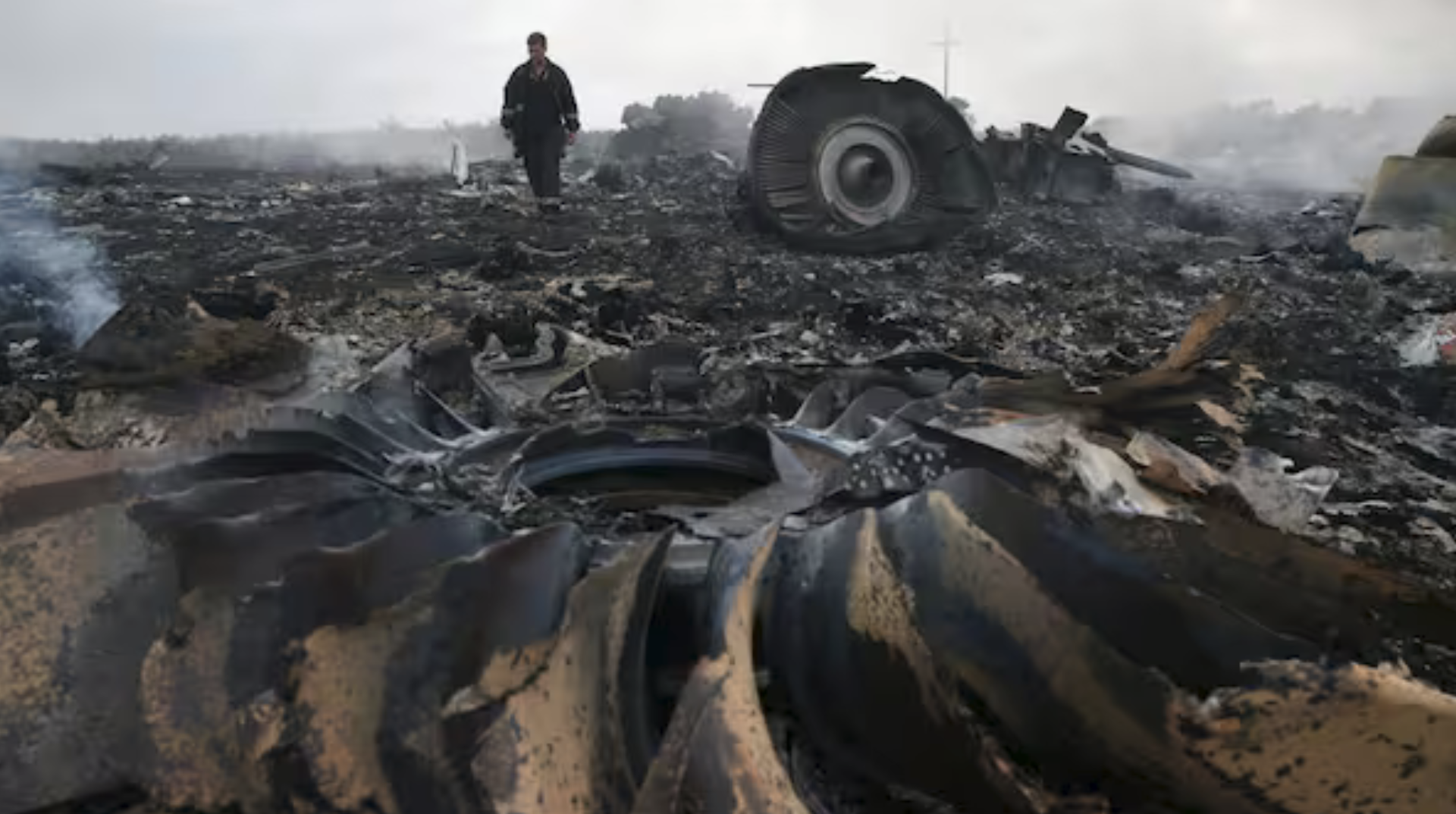
Then what happened next turned a tragedy into a lesson.
Pro-Russian forces refused to cooperate in the recovery operation, leaving bodies in an eastern Ukrainian field for days while the geopolitics ground slowly on. Russia vetoed the UN Security Council's vote to establish an independent investigation. Every institution built over seventy years to govern armed conflict and protect civilian life (every law, every treaty, every governing body) wasn't reluctantly violated. It was deliberately dismantled.
I spent 26 years in aviation and national security. I know restricted airspace, altitude floors, and the warning systems that tell civilian crews when a threat exists below. What struck me most about MH17, beyond the horror of 298 lives erased in an instant, was the paralysis that followed. Europe couldn't sanction Russia effectively because they needed Russian natural gas to heat their homes and run their cities. The US issued strongly worded statements and, ultimately, did relatively little. The UN was vetoed. The accountability machinery of the post-war international order had been engineered for adversaries who still acknowledged the rules they were breaking. This one didn't acknowledge the rules existed.
"Supreme excellence consists in breaking the enemy's resistance without fighting." — Sun Tzu
MH17 was not a miscalculation. It was a demonstration. Pro-Russian forces hadn't just crossed a line. They'd erased it, then made clear they never believed it existed. The world watched, condemned the act, and mostly moved on. Because the leverage to do otherwise simply wasn't there.
The Playbook
In 1999, fifteen years before MH17, two Chinese colonels published something most Western strategists barely noticed. Their book, Unrestricted Warfare, laid out a blueprint for defeating a technologically superior adversary without ever fighting them directly. The core argument was elegant and deeply uncomfortable: war is no longer confined to the battlefield. It bleeds into financial markets, supply chains, information ecosystems, and legal institutions. The goal isn't to destroy American military capability. It's to make American power structurally irrelevant, by controlling the things democracies cannot afford to give up.
MH17 illustrated this logic with a precision no policy paper could match. Russia fired the missile, yes. But Europe's energy dependency on Russia is what showcased the institutional paralysis that followed. The real weapon wasn't the BUK 9M38 sitting in a field in eastern Ukraine. It was the natural gas pipeline running under the Baltic Sea.
Over the last twenty years, we've watched this same playbook run in plain sight and mostly called it trade policy. China has stolen intellectual property across virtually every economic sector (defense, biotech, semiconductor, aerospace) and paid essentially zero price for it. They've purchased firms in entertainment, technology, and financial markets. They've positioned themselves to control supply chains for rare earth minerals, semiconductors, and the materials modern militaries actually depend on. They've built a digital yuan explicitly designed to chip away at the dollar's reserve status. And they've done all of this while expanding military capability at a pace that makes Western procurement timelines look embarrassing. Russia, for its part, has shown you can reshape elections and fracture alliances without a single soldier crossing a border.
The new battlefield is everywhere. We are still drawing strategy maps for the old one.
A World That Looks Away
The most important thing MH17 taught us wasn't about Russia. It was about everyone else. When the moment came to impose real costs and demand real accountability, the calculus was depressingly simple. European households needed Russian gas to stay warm. European businesses depended on Russian trade to stay solvent. The economic architecture built over the previous two decades had been engineered for integration and profit, not confrontation and cost. And so the world looked away.
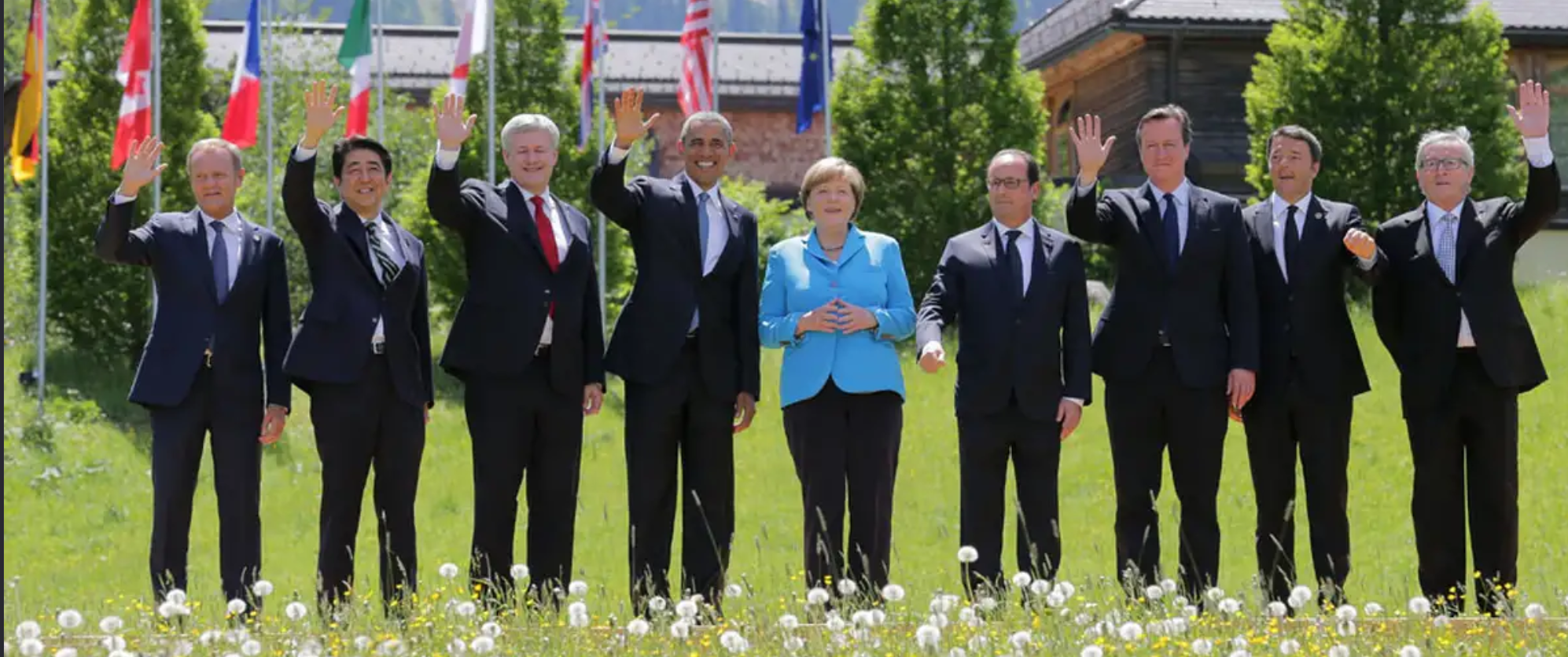
This is not a one-time failure of political will. It is a structural feature of the strategic environment, and it shows up everywhere you look. When China acquires firms near sensitive infrastructure, manipulates supply chains to serve its interests, or steals intellectual property at industrial scale, the democratic response follows a familiar script: strongly worded statements, calls for dialogue, and a return to business as usual. Because the economic stakes of genuine confrontation are too high for too many players to sustain.
The lesson isn't that our allies lack courage. It's that economic interdependence, built without strategic intention, becomes a self-imposed constraint on action. You cannot sanction your energy supplier in winter. You cannot confront your semiconductor manufacturer when your own factories depend on their output. You cannot build coalition pressure against a country that holds the debt of your largest trading partners. This is the world as it is.
Multilateral institutions will not save you when the cost of saving you is too high for others to pay. That isn't cynicism. It's the lesson MH17 wrote in the clearest possible terms, and it's the environment in which every leader, national or organizational, now has to position themselves.
So what does good positioning actually look like in a world that looks away?
It starts with dependency mapping: genuinely knowing where your critical reliances are, who controls them, and what leverage that hands to an adversary. Not as a theoretical exercise, but as actionable strategic intelligence. The countries that moved fastest after Russia's 2022 invasion were the ones already reducing their energy dependency before the crisis arrived. Germany had not made that preparation. The gap in outcomes between those two approaches is the whole argument, stated simply.
Good positioning also means building alternatives before you need them. Dependency isn't inherently dangerous. Dependency without options is. Semiconductor manufacturing concentrated in a single geography is a vulnerability; distributed production across allied nations is a strategic asset. The investment required to build that alternative always feels expensive, right up until the moment you need it and don't have it.
And it means accepting that trade relationships are never just trade. Every economic connection is also a channel of leverage, running in both directions. The question isn't whether to engage with the world. It's whether you're engaging with enough optionality that a disruption doesn't force a capitulation. That distinction, between integration with strategic awareness and integration without it, is the difference between a partner and a hostage.
The Case for a Coherent Strategy
We have capable institutions distributed across agencies, domains, and departments. Quite a few of them, actually. What we lack is a clear theory of how those capabilities reinforce each other, and how they silently fail each other when nobody's coordinating the whole. Roger Martin would call this a missing cascade. In his framework, strategy is an integrated set of choices: winning aspiration, where to play, how to win. Under the new rules of war, those choices span economics, technology, information, and institutions all at once. An answer that only lives inside the Pentagon isn't much of an answer.
Integrated deterrence is the right concept. But deterrence has to be built, not just declared. It requires capital frameworks that treat intangible assets with the same seriousness we give aircraft carriers. It requires supply chain architecture that doesn't quietly hand leverage to adversaries before the shooting starts. And it requires a government that competes genuinely for the talent it needs to do any of this. These aren't three separate programs. They're the same strategy, expressed across three domains, and they only hold together if someone is treating them as connected.
MH17 happened because one side understood that the rules had changed and acted on it. The institutions designed to hold them accountable had not caught up. That gap, between how the game is actually being played and how we've organized ourselves to respond, is the defining strategic problem of this era.
The question isn't whether the rules of war have changed. They have. The question is whether we're willing to build a strategy for the world as it actually is. Before we find ourselves staring at another pair of 17s.
What dependencies in your organization have you never actually mapped? What leverage are you handing a competitor without realizing it? That's where the new rules of war are won and lost; not on a battlefield, but in a spreadsheet.